
Will a Used Radio Work with Your Existing Fleet?
A used radio joins an existing fleet only when the relevant radio settings and system conditions match. Brand, case shape and connector compatibility are useful starting clues, not proof of communication.
Match the radio in order
- Band and sub-band: compare the label and the fleet's permitted operating range.
- Mode: establish whether the system is analogue, DMR, dPMR or NXDN, and whether the exact radio supports the required mode.
- Channel parameters: compare frequencies, bandwidth and the signalling or system settings required by your fleet.
- Configuration: check the codeplug, enabled features, authorised access and any restrictions on the used unit.
- System type: treat repeaters, mobiles, bases, overseas use and licence changes as separate checks.
Compare familiar used-radio models
A used Motorola XT420 is a PMR446 example; matching its channel and code to a fleet is still required.
| Model | Known starting point | Fleet check |
|---|---|---|
| Motorola GP340 | 16-channel analogue handheld. | Match the exact VHF/UHF sub-band, suffix, signalling and analogue channel plan. |
| Hytera PD785 | Colour-display full-keyboard handheld with analogue and DMR capability by exact configuration. | Confirm band, enabled analogue/DMR mode, firmware/features and programmed system. |
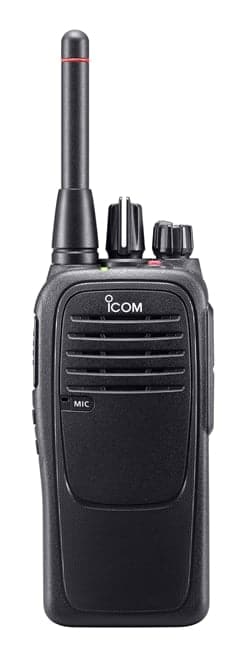
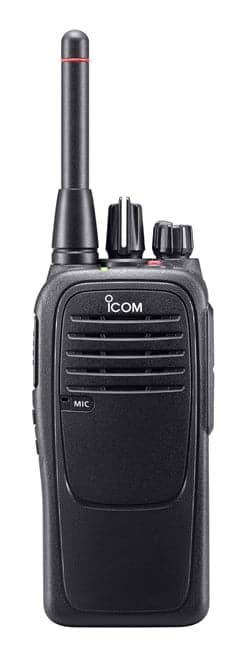
| Icom IC-F29SR | Analogue PMR446 handheld. | Keep it separate from F29SR2, DR and IDAS/NXDN equipment; match the PMR446 channel plan. |
| Kenwood TK-3501T | 16-channel analogue PMR446 handheld. | Keep it separate from TK-3401DT dPMR446; confirm the regional suffix and channel settings. |
| Entel HX482 | Land UHF analogue handheld starting point. | Confirm the exact HX variant, UHF configuration, signalling and accessory scope. |
Record the requirement in the enquiry
Choose the requirement that matches your situation: no programming requested; request to join an existing licensed fleet; unsure of the programming requirement; licence already held; or help needed to identify a new licence route. The buyer handles authorised programming, licence conditions and the channel plan unless the written quotation expressly includes an agreed scope. Any agreed work, scope or cost is confirmed in writing. For overseas use, the destination's permitted bands and operating rules apply. No universal programming or licence service is included by this guide. Warranty terms will be confirmed in your written quotation.
DMR, dPMR and NXDN are separate protocol questions. Analogue fallback or a shared manufacturer name does not create universal digital interoperability. Ask for the exact band, protocol, system and supplied kit in the written quotation.
Start with the used-radio hub. Read the buying guide, condition guidance, the quote route, licensing guidance and PMR446 guidance.