
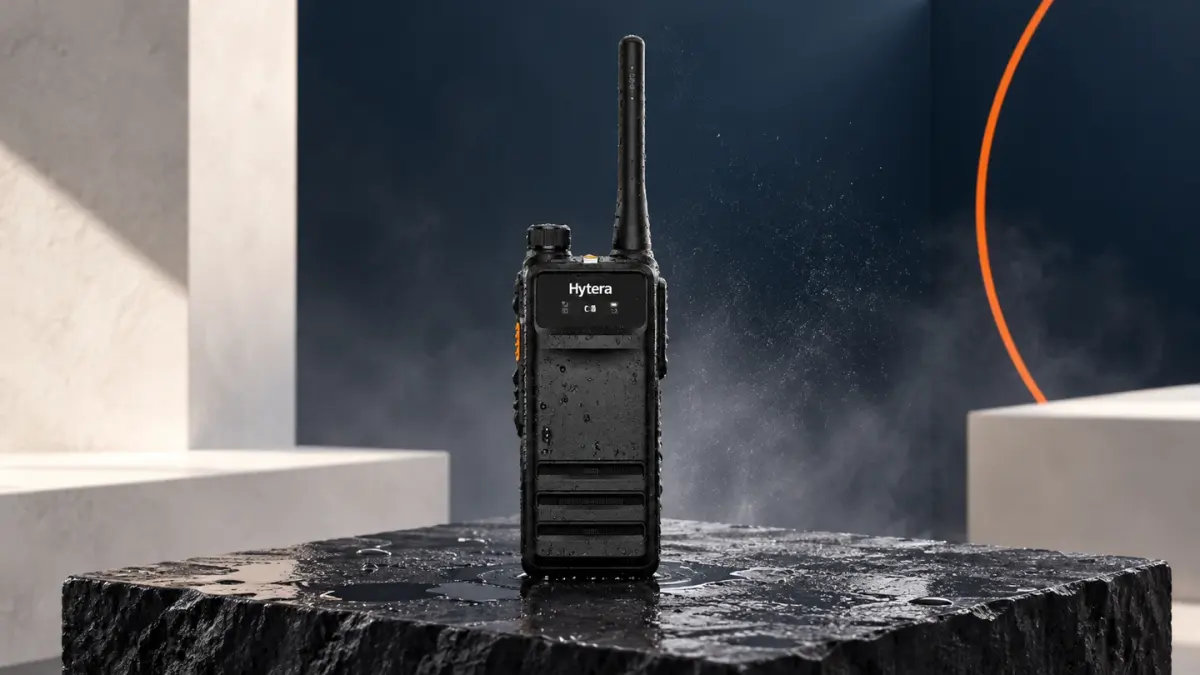
IP68 Two-Way Radios: What Does Dust-Tight and Submersible Really Mean?
What an IP code tells you
The first digit describes protection against solid particles and the second describes protection against water under the stated test conditions. IP67 and IP68 are different ratings. Neither number describes impact strength, chemical or corrosion resistance, or safe use in an explosive atmosphere.
Read the exact model conditions
The manufacturer’s stated test depth and time belong to the exact model documentation. Fit the battery, aerial, covers and connected accessory as specified before relying on the rating. An ordinary IP-rated radio is not automatically intrinsically safe.
After wet or dusty work
- Inspect the housing, seals, covers, battery contact and accessory connector before use.
- Rinse or wipe only in the way the model instructions allow, then dry before charging.
- Do not open covers, change a battery or connect an accessory while water or dust could enter.
- Remove a damaged seal or cracked housing from service until it has been checked.
Solvents, salt spray, high-pressure washdown and Ex zones are separate selection questions. Compare the work condition with the exact model rating and care instructions, then see the HP705 and HP685 pages for model-specific context.
For hazardous-area selection, return to the rugged and Ex guide rather than extending an IP number beyond its stated scope.
Compare the relevant handsets and compatible setup choices in the Hytera radio selection guide.