
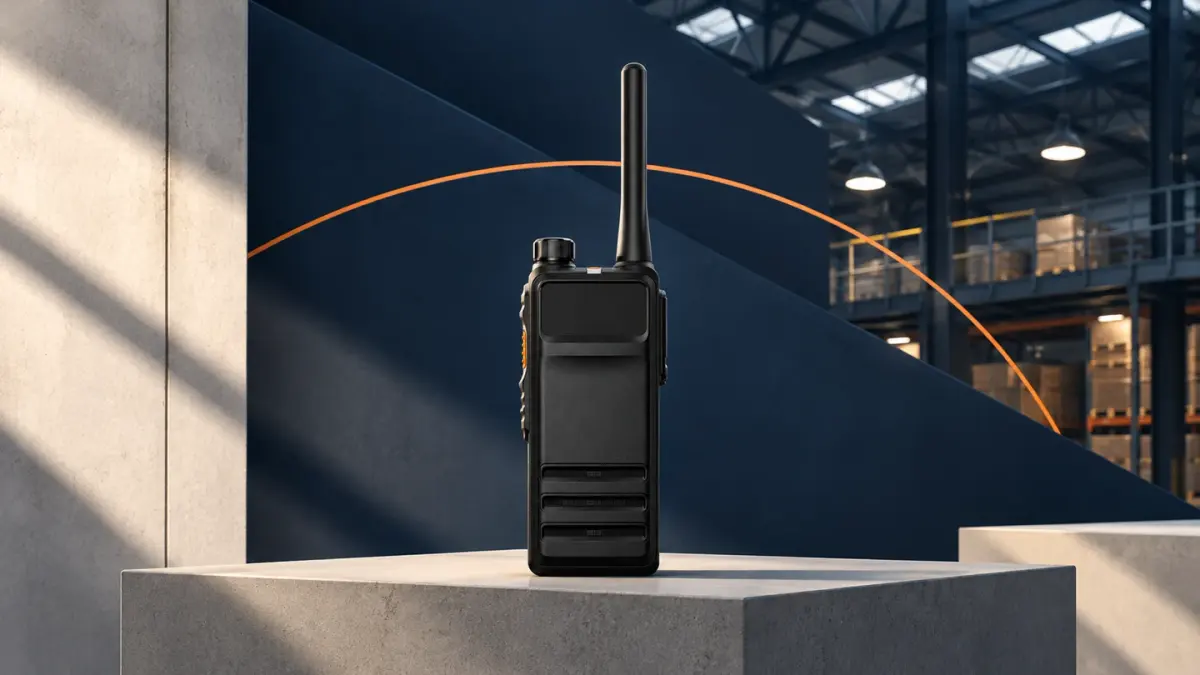
The Ultimate Guide to Rugged Digital Two-Way Radios for Industrial Teams
Rugged digital two way radios are built for sites that destroy ordinary kit: dust, water, drops and constant noise. This guide explains the durability ratings that actually matter in the UK, how digital radio improves on analogue, and the safety features that protect lone and at-risk workers.
What makes a radio genuinely rugged?
Two numbers tell you most of what you need. The IP rating measures sealing against dust and water: an IP67 radio is fully dust-tight and survives a metre of water for thirty minutes, while IP68 handles deeper or longer immersion. Many professional radios also pass MIL-STD-810 military durability tests for drops, vibration and temperature, which is a good sign a handset will shrug off a building site.
Why digital beats analogue on a tough site
Digital Mobile Radio converts speech into data, so audio stays clear right to the edge of coverage instead of fading into hiss. It uses noise-cancelling processing to lift a voice out of machinery and wind, fits two talk paths on one channel, and squeezes more hours from a battery. Most DMR radios also run analogue, so you can migrate a mixed fleet without scrapping everything at once.
Do you need an intrinsically safe ATEX radio?
Where flammable gas, vapour or combustible dust may be present, equipment selection must follow the site risk assessment. Ask a competent person to specify the required hazardous-area classification and certification, and check the exact radio, battery and accessories against it. A standard rugged or IP-rated radio is not automatically suitable. Read the HSE guidance on explosive atmospheres before specifying equipment.
Safety features that matter
- Emergency button: cuts through all other traffic to raise the alarm to a supervisor or control room.
- Lone Worker: asks the user to check in at set intervals and raises an alert if they do not.
- Man Down: a tilt sensor triggers an alarm if the radio stays horizontal, suggesting a fall.
- GPS: shows a control room exactly where a worker is during an emergency.
How to choose for your site
Start with a quick site audit. Note the dead spots, mark any hazardous areas that need ATEX, and count the separate teams that need their own channel. Loud sites need radios that pair with proper noise-cancelling headsets. If handhelds cannot cover the whole site, a repeater will. We are happy to arrange a site survey so you buy once and buy right.
Frequently asked questions
Do I need a licence for a digital radio? Most professional digital radios run on licensed UHF or VHF frequencies, so yes, you will need an Ofcom Business Radio licence. We can sort the right one for you.
Will digital radios talk to my old analogue ones? Usually yes. Mixed-mode radios detect the incoming signal and reply in kind, so you can phase in digital gradually.
How long do the batteries last? A typical shift radio runs 12 to 16 hours on a charge, and high-capacity packs push beyond 20.
Planning your equipment? Send your site details, quantities and existing radio models through our quote enquiry form. We can confirm the proposed setup, compatibility and availability before you decide.