
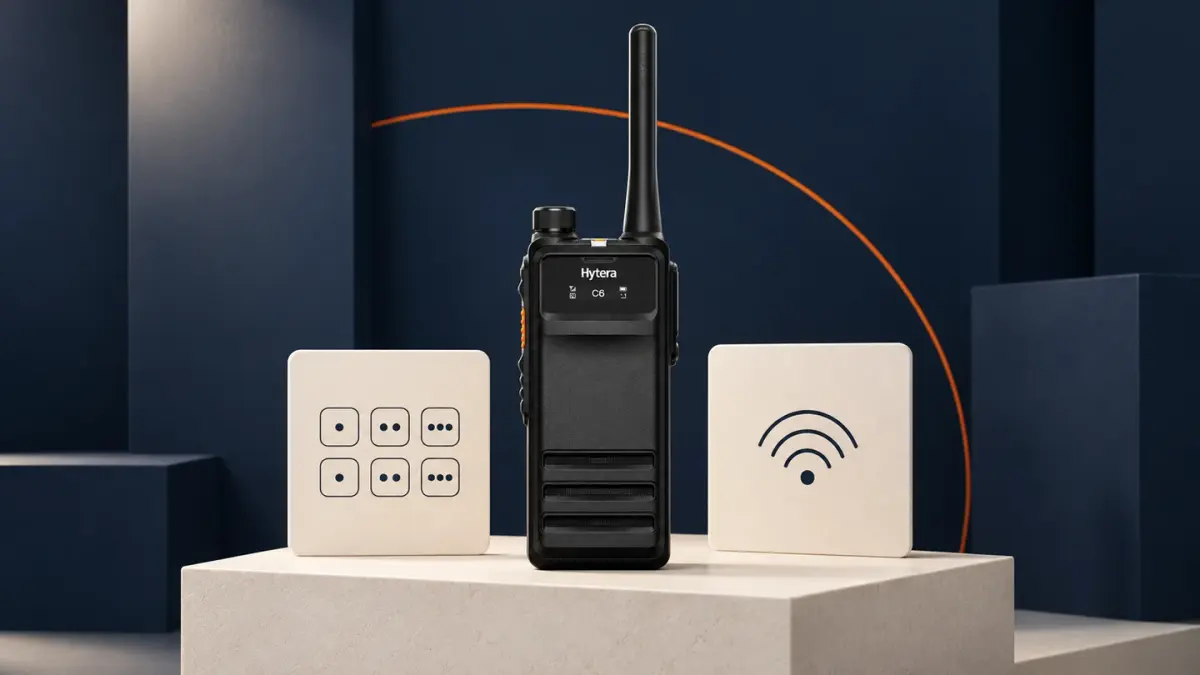
Non-Keypad vs Keypad Two-Way Radios: Which is Right for Your Team?
When you spec a digital radio you will often choose between a non-keypad model and a full-keypad one. The right pick depends on how your team works, not on which looks more capable.
Non-keypad radios
A non-keypad radio strips the controls back to a channel selector and a couple of buttons. There is less to break, less to fiddle with cold or gloved hands, and almost nothing to set up wrong. For security, events, hospitality and most site work, where staff stay on a fixed set of channels, this simplicity is exactly what you want.
Full-keypad radios
A full keypad adds a display and number keys, which let users dial individual radios, send text messages, manage contacts and reach advanced features in the field. It suits supervisors, control-room staff and operations that use private calls or messaging day to day.
A practical rule of thumb
Give frontline staff non-keypad radios for ruggedness and simplicity, and give supervisors keypad models for the extra control. Many fleets mix the two on the same system, which keeps costs down without losing capability where it counts. The Motorola R7 series, for example, comes in both keypad and non-keypad versions on the same platform.
Do both versions work on the same channels?
Yes. Keypad and non-keypad radios from the same range share the same channels and features, so they work together on one fleet without any compatibility worries.
Planning your equipment? Send your site details, quantities and existing radio models through our quote enquiry form. We can confirm the proposed setup, compatibility and availability before you decide.