
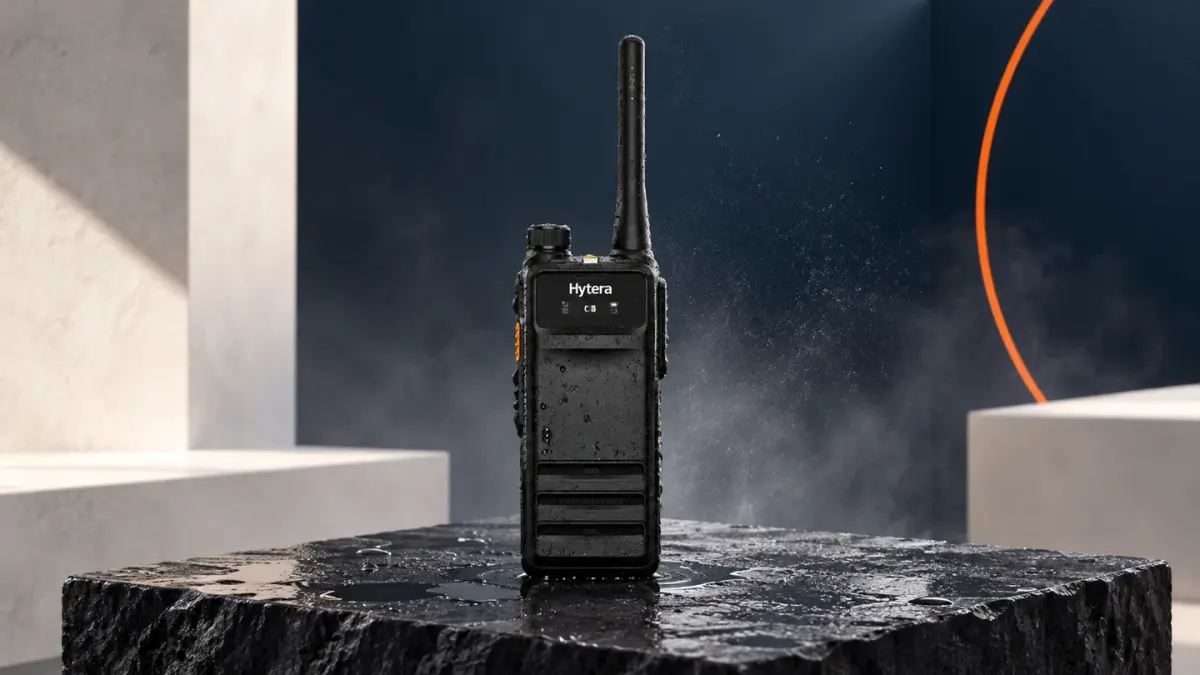
IP68 Two-Way Radios: What Does Dust-Tight and Submersible Really Mean?
You will see IP67 and IP68 stamped on serious two way radios, but what do those numbers actually promise? Here is what the IP rating means in plain English, and why it matters if your radios live outdoors or get wet.
What the two digits mean
IP stands for Ingress Protection. The first digit covers solids and the second covers water. A 6 for solids means fully dust-tight, with nothing getting in. A 7 for water means the radio survives immersion in up to a metre of water for thirty minutes. An 8 means it handles deeper or longer immersion to the maker's stated limit. So an IP68 radio such as the Entel DT985 is both dust-tight and built for serious soakings.
Which rating do you need?
For indoor retail or an office, a lower rating is fine. For construction, facilities, marine and outdoor events, look for IP67 as a sensible floor and IP68 where radios get rained on, dropped in puddles or hosed down. Dust-heavy sites such as quarries and joineries should treat the dust-tight 6 as essential.
Rugged is more than waterproofing
An IP rating says nothing about drops. Pair it with a radio that passes MIL-STD-810 durability testing, and your handset will handle both the puddle and the fall onto concrete. The two ratings together are what make a radio genuinely site-proof.
Does a high IP rating drain the battery?
No. Sealing keeps water and dust out, it does not affect battery life. What you gain is a radio that keeps working in weather that would kill an unsealed handset.
Planning your equipment? Send your site details, quantities and existing radio models through our quote enquiry form. We can confirm the proposed setup, compatibility and availability before you decide.