
Two Way Radios: The Complete UK Guide
Two way radios keep teams talking when phones let them down. They are instant, they do not rely on a mobile signal indoors, and one press of a button reaches everyone on the channel at once. This guide explains how they work in the UK, what the law expects, and how to choose the right radio for your site.
Licensed two way radios or licence-free walkie talkies?
It comes down to one question: do you need an Ofcom licence? Licence-free walkie talkies use the public PMR446 band and suit small sites, shops and events. Licensed two way radios use business frequencies under the conditions of an Ofcom licence. Simple UK Light uses shared channels; range and interference depend on the system and location. Most professional users settle on licensed radios once a team grows beyond a single floor or a handful of handsets.
Do I need a licence?
Most business radios need an Ofcom Business Radio licence. A Simple UK or Simple Site Light licence costs 75 pounds for five years and is issued online, giving you shared frequencies you self-coordinate. Systems requiring a coordinated frequency assignment may need a Technically Assigned licence; this is not a guarantee of exclusive or interference-free use. We can tell you which one fits before you buy.
Digital or analogue?
Digital Mobile Radio, known as DMR, is the standard for most UK businesses today. It fits two conversations on one channel, holds audio clear to the edge of range, and stretches battery life across a long shift. Analogue still suits very small, simple setups, and most digital radios run in mixed mode so you can switch a fleet over gradually.
Handheld, mobile or ATEX?
Handheld portables go where your staff go. Mobile radios can be installed in a vehicle or control room with a suitable aerial. For hazardous areas, have a competent person confirm the zone, gas or dust classification and the required equipment certification. Match the complete radio, battery and accessory combination to that assessment before use.
VHF or UHF?
UHF works best indoors and around buildings because it gets through walls and steel, so it suits warehouses, hotels and urban sites. VHF travels further across open ground, which favours farms, large outdoor sites and marine use.
How far will they reach?
Range depends on the radio, the aerial and what is in the way. Licence-free handsets manage a few hundred metres in town and a couple of kilometres in the open. Licensed systems go further, and a repeater can lift a single site or a town-centre operation onto one shared channel.
Which brands should I look at?
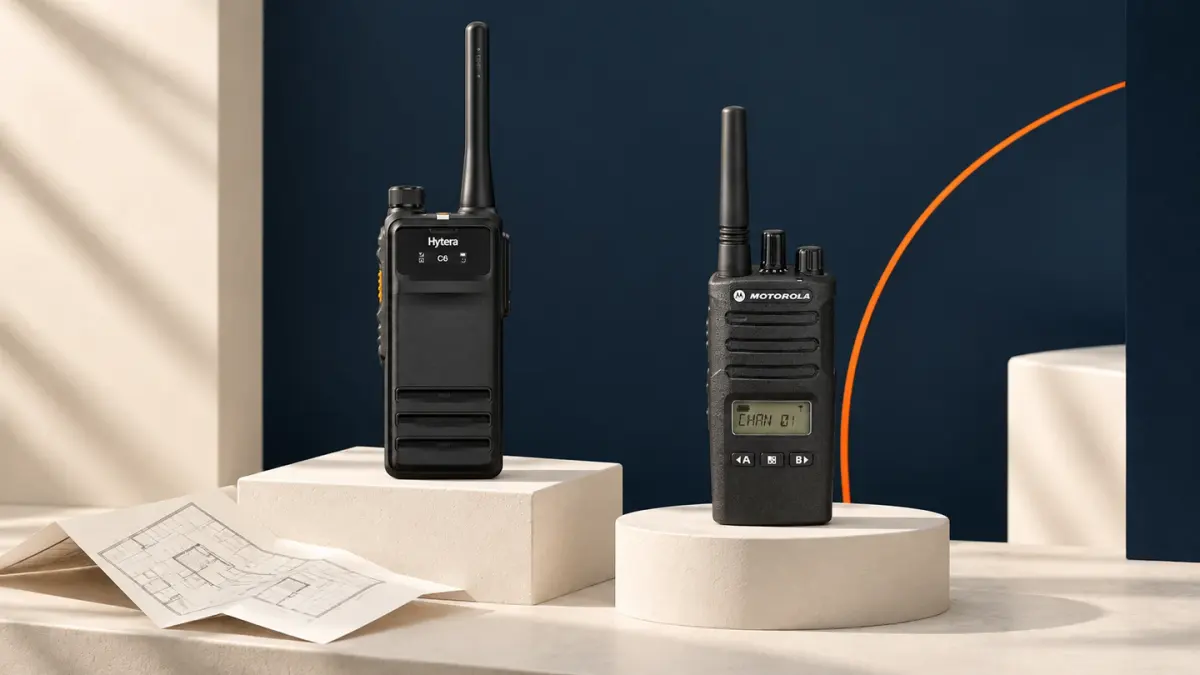
Compare Motorola, Hytera, Kenwood, Icom and Entel models against your coverage, compatibility, battery and environmental requirements. Confirm hazardous-area certification for the exact model and accessories where relevant.
Buying for a specific sector? We publish dedicated kit-and-price guides for schools, care homes, hotels, holiday parks, golf courses, churches and colleges.
Licensing reference: Ofcom business radio licence guidance. Fees and conditions checked 8 October 2026; confirm the current terms with Ofcom before transmitting.
Planning your equipment? Send your site details, quantities and existing radio models through our quote enquiry form. We can confirm the proposed setup, compatibility and availability before you decide.